BUHARI: IPC FROWNS AT DENIAL OF ACCESS TO INFORMATION TO GUARDIAN JOURNALIST IN LONDON

Press Release

BUHARI: IPC FROWNS AT DENIAL OF ACCESS TO INFORMATION TO GUARDIAN JOURNALIST IN LONDON


The International Press Centre IPC, Lagos-Nigeria has described as unwarranted and unhealthy for democracy, the denial of access to information and the call on the London Police to arrest a Guardian reporter who was making enquiries about the President of Nigeria.

“With visits by top government officials and leading politicians to the President at the London Abuja house, his stay there has become knowledge and of public interest” said the Director of IPC, Mr. Lanre Arogundade.

According to him, such public interest demands the establishment of an information unit or centre in London to respond to enquiries about the President.

The IPC Director said other means of responding to the Guardian reporter should have been explored instead of the attempt to get him arrested.

SGD:
Melody Akinjiyan
Safety Alert Desk Officer, IPC
House 11, Dideolu Court, 2nd gate b/stop, Ogba Lagos
Tel: +2348162206470


Melody Akinjiyan
Assistant Program Officer

International Press Centre (IPC), Lagos, Nigeria
IPC is Nigeria's foremost media capacity development organization.
www.ipcng.org  l  www.twitter.com/IPCng  l www.facebook.com/ipc.nigeria  l  www.youtube.com/ipcng  l  Google+ Ipc Ng


Tel: +2348132776441  
Twitter: @Melodie009
BB Pin: 5665A0C2

Writing conference offers scholarships [Worldwide]

⛅   Deadline: 

       MARCH 17, 2017
All writers, from inexperienced to very established, are encouraged to apply for scholarships and fellowships to attend a writing conference in June.
The 61st annual Wesleyan Writers Conference will take place from June 14 to 18 on the Wesleyan University campus in Middletown, Connecticut. The event will cover a wide range of topics, including journalism, nonfiction, editing and translation, and writing about science and medicine.
There are several scholarships available especially for journalists who wish to attend the conference. Teaching fellowships are also available for writers who have completed book-length manuscripts.
The scholarships cover at least part, if not all, of the tuition for the conference. In order to apply, applicants must submit a registration form, a representative sample of their work in nonfiction, a letter of application expressing their interests and a resume.
International applicants are encouraged to apply, although travel fees will not be covered by the scholarships.
Applicants may choose to also submit a US$100 deposit that will secure their place at the conference, although this is optional if they are only applying for the scholarship. Submissions are accepted both electronically and by regular mail.
The deadline to apply for the scholarships is March 17.
For more information, click here.

IWMF's fund for women journalists open [Worldwide]

Deadline: 

MARCH 07, 2017
Female journalists of all nationalities can apply for a grant.
The International Women's Media Foundation (IWMF) is accepting applications for the third round of the Howard G. Buffett Fund, which aims to support women journalists in their projects and endeavors.  
Possible projects include exposing under-reported but critical global issues; challenging traditional media narratives; developing field-based expertise and strengthening careers; pursuing training and leadership opportunities; and launching entrepreneurial news projects or acquiring the skill to do so.
Applicants must have three or more years of professional journalism experience. Teams of journalists may apply, however the submission must be from a woman journalist and her team must include at least 50 percent women.
The deadline is March 7.
For more information, click here.

Call for Entries: Early Childhood Development Reporting Fellowship

The International Center for Journalists (ICFJ), in partnership with the Children’s Investment Fund Foundation (CIFF), is recruiting for Early Childhood Development Reporting Fellows.
ICFJ will recruit 10 Early Childhood Development Reporting Fellows from Bangladesh, Brazil, India, Kenya, Nigeria and Tanzania. During the year-long program, the Fellows will receive training, mentoring and financial support to produce stories on nutrition and early-childhood development.
Two more groups of fellows will be recruited over the next two years. The goal of the fellowships is to improve news coverage of child health and form a global network of reporters covering this critically-important issue.
To become a 2017 Fellow, candidates must complete a Fellowship application. Applicants should include
• A resume or CV
• Examples of stories produced on early-childhood development
• A reporting-project proposal that outlines story ideas the Fellow will pursue and a reporting and publishing/broadcasting plan
How to Apply:
Entries must be submitted by 11:59 p.m., U.S. Eastern time, Sunday, February 26, 2017Apply here.
Eligibility:
The Fellowship is open to journalists covering issues of child health and development for news outlets based in Bangladesh, Brazil, India, Kenya, Nigeria and Tanzania. Successful applicants must be employed by a news outlet or have a commitment to publish/broadcast from a news outlet to participate. Applicants must be proficient in English. Stories submitted may be written in your native language; however, reporting project proposals must be submitted in English.
The Judging Process:
The winners will be selected by an international panel of judges that includes media professionals and representatives from ICFJ and CIFF.
Selection will be based on professional qualifications, relevant experience, previous reporting on childhood development, and demonstrated impact o

IPC Transparency and Anticorruption Project; Calling on Journalists

A modest remuneration awaits Journalists who are interested in doing reports on transparency and anticorruption issues
For further details contact International Press Centre, Lagos immediately on 08020359629 or stellanwofia@ipcng.org

Mandela Washington Fellowship open [Africa]

Mandela Washington Fellowship open [Africa]


Posted on September 23, 2016

Deadline: 

OCTOBER 26, 2016


Leaders ages 25 to 35 can apply for this program.
The Mandela Washington Fellowship, launched by the U.S. government's Young African Leaders Initiative (YALI), will bring 1,000 young leaders to the United States in summer 2017 for academic coursework and leadership training.
The program also seeks to create opportunities in Africa for fellows to put new skills to practical use in leading organizations, communities and countries.
The fellowship includes a six-week academic and leadership institute, a summit with U.S. leaders in Washington and an optional six-week U.S. professional development experience and activities in Africa.
Citizens and residents of the following countries are eligible: Angola, Benin, Botswana, Burkina Faso, Burundi, Cameroon, Cabo Verde, Central African Republic, Chad, Comoros, Democratic Republic of the Congo (DRC), Republic of the Congo, Cote d’Ivoire, Djibouti, Equatorial Guinea, Eritrea, Ethiopia, Gabon, The Gambia, Ghana, Guinea, Guinea-Bissau, Kenya, Lesotho, Liberia, Madagascar, Malawi, Mali, Mauritania, Mauritius, Mozambique, Namibia, Niger, Nigeria, Rwanda, Sao Tome and Principe, Senegal, Seychelles, Sierra Leone, Somalia, South Africa, South Sudan, Sudan, Swaziland, Tanzania, Togo, Uganda, Zambia and Zimbabwe. 
The deadline is Oct. 26.
For more information, click stellanwofiaupdates

Call for Entries: Wole Soyinka Centre set to select 2016 best investigative reporter


Call for Entries: Wole Soyinka Centre set to select 2016 best investigative reporter


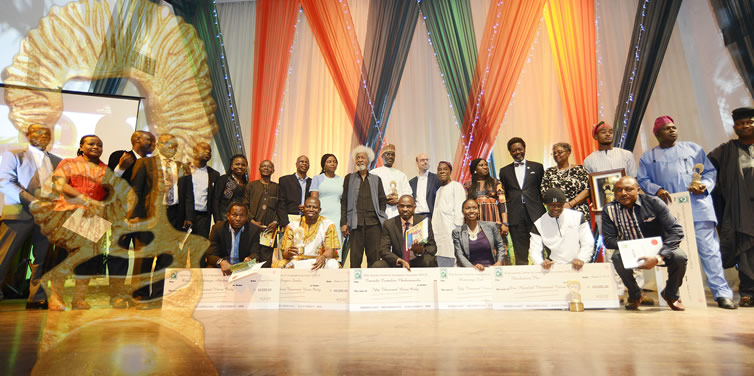
The call for application towards the selection of the 2016 best investigative reporter as part of the Wole Soyinka Award for Investigative Reporting opens on Tuesday 4 October.  Wole Soyinka Centre for Investigative Journalism (WSCIJ) in its invitation for entries requests Nigerian journalists or team of journalists, full or part-time, with stories published between 4th October 2015 and 3rd October 2016 to apply for the eleventh edition of the award.
The Centre has honoured Nigerian investigative journalists through the award programme for ten years. It is focused on works that report cases of corruption, human rights abuses, and regulatory failures. Categories for this year’s edition are print, online, photo, editorial cartoon, television and radio. The call for entries emphasises that the submitted stories should be targeted and received by a Nigerian audience.
All entries will be collated using the entry coding system and judged by a panel of experts from the media and related professions who are keen on investigative journalism. Judges would score stories based on ethical reporting, courage, individual creativity and public interest slant.
Applications are to be submitted at the Wole Soyinka Centre office, No 18A Abiodun Sobanjo Street, Off Lateef Jakande Street, Agidingbi, Ikeja, Lagos.  Online entries must however, be sent via email toentries@wscij.org. The deadline for the submission is Monday 24th October 2016.
Deadline for Submission of Entries:  4PM Monday October 24, 2016

The Haller Prize for Development Journalism 2016

The Haller Prize for Development Journalism 2016

“How best can digital technology empower development in sub-Saharan Africa? And where are the challenges?”

The Haller Prize for Development Journalism is now in its third year and was created in order to promote African-led discussions around development. The continent is changing and as issues facing the developing world grow more complex, journalism has become a critical medium in which to throw light on them and chronicle real change.
The Haller Prize will be awarded to a writer able to explore insightfully the challenges and opportunities of digital technology in the development sector. There will be 3 winners (1st, 2nd and 3rd place) and the successful entries will offer unique interpretations; either shedding light on sector failings or offering comment on best practice.
The Prize is open to all sub-Saharan African nationals who are resident in the region and will be awarded for a piece of original, previously unpublished written work up to1000 words in length. To date, our prize winners have gone on to write articles for the UN; have been shortlisted for Thomson Reuters awards; and been invited to attend African Development Bank conventions on climate change.
In 2014, Haller developed a Farmers App, taking advantage of Africa’s burgeoning smartphone market in order to put best practice in affordable, sustainable, scalable farming into the hands of smallholders. In the words of Haller’s CEO, Alia Malik, “We developed the Haller Farmers App in order to connect more farmers with information that could enable sustainable livelihoods. Digital technology is necessarily dynamic. It is the first step of a learning process – maybe what farmers really want is to be connected to each other”. It is for this reason we have chosen to have technology as this year’s theme as it is an integral part of both Haller’s future and Africa’s more widely.
Entries must be received by 24.00hrs. GMT on Friday 16th September 2016 and will be judged by an independent panel of international repute.
Prizes: 1st Prize GBP 3000, 2nd Prize GBP 1000 and 3rd Prize GBP 500
The Prizewinners will be announced on Thursday 17th November 2016 through a virtual Prize ceremony here on our website.
To apply, and for more information, please email prize@haller.org.uk

Nigerian military threatens journalist for not revealing sources

Abuja, Nigeria, August 18, 2016 -- The Nigerian military should cease threatening freelance journalist Ahmad Salkida with prosecution for not acting as an informer, the Committee to Protect Journalists said today. The military has said the journalist could face terrorism charges if he does not provide it with information he gained in the course of his reporting on the militant group Boko Haram.
In a statement carried by Nigerian news websites on August 14, military spokesman Col. Sani Kukasheka Usman declared Salkida and two civil-society workers - Aisha Wakil and Ahmed Bolori - "wanted for interrogation" regarding the location of over two hundred school girls Boko Haram abducted in April 2014. In the statement, Col. Usman invoked the 2011 Terrorism Prevention Act, under which "Nigerians could be punished for failure to disclose information about terrorists or terrorists' activities." He said, "We are also liaising with other security agencies for their arrest if they [fail] to turn up." Salkida has lived in the United Arab Emirates since August 2013.
"Journalists must sometimes rely on the trust of dangerous people. Coercing them to become informants risks putting all journalists under suspicion and in danger," CPJ West Africa Representative Peter Nkanga said. "Nigeria's military should not threaten Ahmad Salkida and instead ensure that he is free to work."
On August 16, Nigerian Director of Defence Information Brig. Gen. Rabe Abubakar said that the military was only inviting Salkida and the two civil-society workers for questioning. "We are only inviting them to shed light on pending issues that will support current military efforts, and not to arrest them," Abubakar said in remarks quoted by the broadcaster Channels Television. 
Salkida wrote on his personal blog on August 15 that he would accept the military's invitation. The journalist told CPJ that he believed the military was trying to punish him for his persistent reporting on Boko Haram since 2006. He said that he had returned to Nigeria three times since May 2015 at the invitation of various federal government agencies.
Salkida told CPJ that he feared for his life, and that anonymous callers had threatened him about his articles and posts to social media websites and his contacts with Boko Haram. Salkida has received similar threats in the past, CPJ reported at the time.
Salkida has been covering  Boko Haram since mid-2006. Police detained him in 2009 over his reports on the activities  of the militant group when he was a reporter for the independent Daily Trust newspaper. He fled his home in the northern Nigerian city of Maiduguri in July 2011 after callers identifying themselves as Boko Haram members threatened him with death, following the publication of his profile of Boko Haram's first suicide bomber.
Boko Haram has claimed responsibility for attacks that have killed thousands of people, including Nigerian television journalist Zakariya Isa, who the organization claimed was a spy for the government.
 
CPJ is an independent, nonprofit organization that works to safeguard press freedom worldwide.
Contact:
Angela Quintal
Africa Program Coordinator
+1 212-300-9004
Email: aquintal@cpj.org
Kerry Paterson
Africa Senior Research Associate
+1 212-300-9031
Email: kpaterson@cpj.org
Peter Nkanga
West Africa Representative
Email: pnkanga@cpj.org

What journalists should know before covering the Rio de Janeiro Olympics

Sam Berkhead | August 03, 2016
On Friday, the world’s attention will turn to Rio de Janeiro for the 2016 Olympic and Paralympic Games — along with some 30,000 journalists set to descend on the city.
The lead-up to the Games hasn’t been without its controversies. The Zika virusBrazil’s preparednesswater safety for athletes,archaeological disputes and human rights concerns have all cast a pall over the event. That means there’s no shortage of stories for journalists to pursue outside the athletic events — but at the same time, this year’s Games offer up a series of unique journalistic challenges.
So what should journalists know and understand before heading to this year’s Games? Check out these tips and takeaways:

Safety

Journalists heading to Rio face two main health and safety threats: Zika and crime. Because it’s currently the dry season in Brazil, the risks of contracting Zika are much lower. The Centers for Disease Control and Prevention has released a guide to Olympic travel that contains useful tips.
And fortunately, while the crime rate in Rio de Janeiro state increased compared to last year, visitors are “statistically very likely to be safe,” according to local security specialists.
To make sure you’re prepared for any potential safety threats, IJNet’s Journalism Safety Toolkit can be a helpful starting point. This video from the International News Safety Institute (INSI) goes more in-depth with the risks that journalists in Rio may face:

Finding underreported topics

As stated before, there are plenty of topics for journalists to examine in Rio outside of the actual Olympics themselves. Outside of reporting on sporting events, journalists will also have the opportunity to report on issues that affect the average Rio resident rather than tourists or athletes. Narratives surrounding the city’s water quality, for example, tend to focus on health risks to Olympic athletes rather than the impact it has had on locals’ livelihood.
“There are incredibly important considerations around finance and sporting events,” said journalism professor Laura-Jane Filotrani in an interview about how reporters could cover the Olympics with London South Bank University. “Where is the funding for the Games coming from? What are the implications? What are the benefits or losses post-Games, for the host city and its residents?”
Nor should journalists feel compelled to paint the Games as a resounding success for Brazil, following conventional narratives. The Olympic Games are notorious for placing immense economic and social strain on their host cities, and recession-hit Rio de Janeiro is arguably especially vulnerable. This creates a wealth of stories that will need to be told long after the closing ceremony on August 21.
“If there’s one mistake that international media should avoid, it is letting the big sporting event overshadow critical narratives, and then abandoning them completely once the circus leaves town,” Cerianne Robertson, research coordinator and writer at Catalytic Communities (CatComm), wrote in Politico.

Avoiding cliché

While Rio de Janeiro is a distinctive city, it’s important for journalists to avoid falling into traps of cliché, inaccuracy and sensationalism, Robertson explained. For example: Rio is not, as some articles have suggested, the capital of Brazil; Brasilia is.
Calling Rio’s favelas — or low-income and working-class communities — slumsshanty towns or ghettos, is a damaging habit foreign journalists have adopted. Sensationalist language referring to favelas as Rio’s “infamous,” “notorious” “underbelly” that contrasts with the city’s beaches and caipirinhas should also be avoided.
“The stigma favela residents face affects their confidence, self-esteem and life opportunities,”CatComm wrote. “This stigma is reinforced every time a reporter revisits the media stereotype of favelas as slums and dark places of precariousness and crime and has serious consequences. Rio’s communities should be recognized for what they are, and named accordingly. As such, we should call them favelas.”
RioOnWatch’s Olympics Resources for Journalists offers helpful tip sheets, guidelines and other resources for reporting on Rio de Janeiro’s favelas.